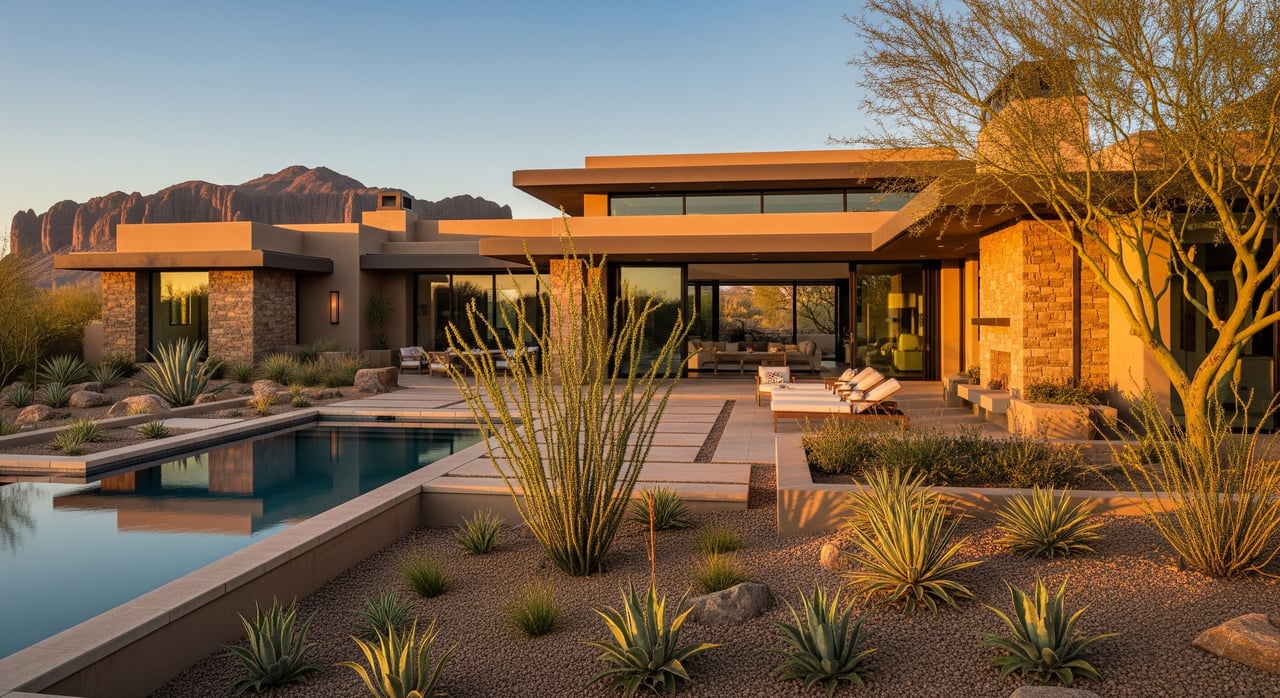
Are you shopping in Gilbert or nearby Scottsdale and wondering if your price point pushes you into a jumbo loan? You are not alone. Higher-end homes often sit above the standard loan limits, and that changes how you qualify, how your appraisal is handled, and even how fast you can close. In this guide, you will learn what counts as a jumbo in Arizona, how lenders evaluate these loans, how rates affect your buying power, and the best way to coordinate appraisals and timelines in Maricopa County. Let’s dive in.
Jumbo vs. conforming loans
Conforming loans meet Fannie Mae and Freddie Mac guidelines, including loan-size limits set each year by the Federal Housing Finance Agency. These limits are county specific and can change annually.
Jumbo loans are non-conforming. Any loan above the county’s conforming limit is considered jumbo. These loans are not purchased by Fannie or Freddie, so individual lenders set their own underwriting, pricing, and documentation standards.
Where to check Arizona limits
The official source for the current conforming loan limits is the FHFA’s county lookup. Maricopa County includes Gilbert, so the Maricopa limit is the one that applies. Limits may be higher in designated high-cost counties and they increase for multi-unit properties. Always verify the current year’s numbers before you write an offer.
Jumbo underwriting basics
Jumbo financing is designed for larger, often more complex loans. Lenders look for stronger credit, conservative debt-to-income ratios, larger down payments, and more cash reserves than you might see on a typical conforming loan.
Credit, income, and DTI
- Credit score: Many jumbo programs target 700 to 740 or higher. Some allow 660 to 680 with strong compensating factors.
- Debt-to-income ratio: Many lenders want 43 percent or lower. Some set stricter caps in the 36 to 45 percent range based on your profile and the property.
- Income verification: Expect standard documentation such as two years of tax returns, W-2s, 30 days of pay stubs, bank statements, and a tax transcript authorization.
Down payment and reserves
- Down payment: For a primary residence, 10 to 20 percent down is common when credit and reserves are strong. Second homes or investment properties often require 20 to 30 percent or more.
- Cash reserves: Jumbo programs frequently require 6 to 12 months of principal, interest, taxes, and insurance on hand. Higher LTVs, second homes, or complex profiles can push this higher.
- Asset seasoning: Large deposits and gifts must be sourced and documented. Be ready to show statements for the required months.
Alternative qualification paths
If your income is irregular or you are self-employed, some lenders offer non-QM jumbo options:
- Bank-statement programs: Qualify using deposits instead of tax returns.
- Asset-depletion: Use investment or retirement accounts to generate qualifying income.
- Interest-only or adjustable-rate jumbos: Lower initial payments, but understand the rate-reset risk.
Property and appraisal expectations
Jumbo loans typically require a full interior and exterior appraisal. For luxury or unique homes, lenders prefer appraisers with recent experience in high-end neighborhoods. Some lenders limit certain property types such as non-warrantable condos, unusual acreage, or highly custom builds. Ask about eligibility early.
How rates change buying power
Jumbo rates can be similar to or higher than conforming rates depending on lender pricing, your credit profile, loan size, and market competition. Even small moves in rate can meaningfully change your payment at luxury price points.
Here is a simplified example using a 30-year fixed mortgage on an $800,000 loan amount (roughly 20 percent down on a $1,000,000 home):
- At 4.00 percent, estimated monthly principal and interest is about $3,820.
- At 4.50 percent, estimated monthly principal and interest is about $4,053.
- That is a difference of about $233 per month, or roughly 6.1 percent higher for the same loan amount.
From a purchasing-power view, if you want to keep your payment near $3,820 and the rate is 4.50 percent, your maximum loan amount drops to about $754,000. That is about a 5.7 percent reduction from $800,000. The takeaway is that a 0.25 to 0.50 percent rate shift can move your buying power by several percentage points, and the effect grows as loan size increases.
Financing paths for higher-end buyers
You have options when your target home price sits near or above the conforming cap.
Conforming high-balance vs. pure jumbo
- High-balance conforming: In some years and counties, agency programs allow slightly larger loans above the baseline limit. Availability depends on county eligibility, so verify whether Maricopa qualifies in the current year.
- Pure jumbo: Non-agency financing that covers larger loan amounts and more property types. Expect stricter overlays and larger reserves.
Portfolio and non-traditional programs
- Portfolio loans: Bank-held loans with flexible underwriting that can fit unique income, construction, or multi-property scenarios. Rates and fees vary by lender appetite.
- Bank-statement and asset-depletion programs: Helpful for self-employed or asset-rich buyers who need alternative income documentation.
- Interest-only or ARMs: Can reduce the initial monthly payment. Balance the benefit against possible future rate changes and your time horizon in the home.
How to choose among them
Match the product to your goals:
- Time in the home: Shorter horizons can favor ARMs or interest-only options. Long-term plans often point to fixed rates.
- Cash strategy: Decide how much down payment and reserves you want to deploy versus preserving liquidity for investments or improvements.
- Property type: Unique or hard-to-appraise homes may be better suited to portfolio lenders who understand the local market nuance.
Appraisals and timelines in Maricopa County
A smooth luxury purchase requires early planning. High-end homes often need more appraisal time and more documentation.
Typical timeline ranges
- Pre-approval: 1 to 3 business days for a standard review. Alternative documentation can take longer.
- Appraisal: 7 to 14 business days is common. Luxury or thin-comp areas like parts of Scottsdale and custom pockets in Gilbert may require 10 to 21 days or more.
- Title and HOA review: 7 to 14 days depending on how quickly documents are produced.
- Underwriting to clear-to-close: Conforming files can clear quickly. Jumbo files with complex income, reserves, or condo reviews can take several weeks.
Best practices that keep you on track
- Start pre-approval early. Gather two years of tax returns, W-2s, 30 days of pay stubs, 2 to 3 months of bank statements, brokerage and retirement statements, gift letters, and your tax transcript authorization.
- Order the appraisal as soon as your offer is accepted. Ask your lender to assign an appraiser with recent luxury experience in the micro-market.
- Share an appraisal package. Include seller disclosures, recent comparable sales, professional photos, floor plans, upgrade lists, lot features, and any contractor estimates.
- Coordinate access. Try to schedule inspections and the appraisal close together to reduce gaps that slow underwriting.
- Build in contingency time. Allow space for appraisal review or renegotiation if value comes in below contract.
If the appraisal comes in low
You have options to keep the deal moving:
- Provide additional comparable sales and documentation for a reconsideration of value.
- Negotiate concessions with the seller.
- Increase your down payment to cover part of the valuation gap.
- Discuss a second appraisal or a lender-ordered review when appropriate.
Gilbert and Scottsdale market notes
Gilbert offers a broad mix of homes with some higher-end pockets near custom communities and golf-adjacent areas. Many purchases here will fit within conforming limits, but luxury segments can exceed them depending on the current FHFA threshold.
Neighboring Scottsdale, North Scottsdale, and Paradise Valley have concentrated luxury inventory where jumbo financing is common. These areas often have fewer truly comparable sales at the top of the market, so working with appraisers who understand custom finishes, view premiums, and community nuances is important. Sellers in these neighborhoods also expect well-documented buyers and efficient closings, so arriving with a complete jumbo pre-approval helps you stand out.
Quick checklist for luxury buyers
- Verify the current Maricopa County conforming limit with the FHFA county lookup so you know if your price point triggers a jumbo.
- Secure a full jumbo pre-approval with reserves documented and conditions outlined.
- Gather documentation early: two years of tax returns, W-2s, 30 days of pay stubs, 2 to 3 months of bank statements, brokerage and retirement statements, business documents if self-employed, and gift letters if applicable.
- Discuss appraiser qualifications with your lender and emphasize recent luxury experience in the target neighborhood.
- Confirm required reserves in months of PITI and ensure funds are seasoned.
- Evaluate product tradeoffs: fixed vs ARM, points and buydowns, portfolio or alternative documentation if needed.
- On contract, order the appraisal immediately and deliver a complete appraisal package.
- Keep communication flowing among you, your lender, your agent, the listing agent, and title to handle requests quickly.
Next steps
You do not have to navigate jumbo financing alone. If you are considering a high-end purchase in Gilbert, Scottsdale, or Paradise Valley, the right strategy can save time and stress while protecting your buying power. For discreet guidance on neighborhoods, offer strategy, and how to pace your appraisal and lender timelines, connect with Laura Joyner to Request a Confidential Consultation.
FAQs
What is a jumbo loan in Arizona?
- A jumbo loan is any mortgage amount above the FHFA conforming loan limit for the county where the property is located. In Maricopa County, that limit applies to Gilbert. The limit can change each year.
How do I find the current conforming loan limit for Maricopa County?
- Use the FHFA’s official county lookup for the current year. Check the single-unit amount first, and note that multi-unit properties have higher limits.
What credit score do I need for a jumbo loan?
- Many lenders seek 700 to 740 or higher. Some programs accept 660 to 680 with compensating factors such as lower LTV, strong reserves, or high income stability.
How much down payment is typical for a jumbo loan?
- For a primary home, 10 to 20 percent down is common with strong credit and reserves. Second homes or investment properties often require 20 to 30 percent or more.
How much in reserves will lenders require on a jumbo loan?
- Expect 6 to 12 months of principal, interest, taxes, and insurance as a baseline, with higher requirements possible for higher LTVs or complex profiles.
How do rate changes impact my jumbo buying power?
- A 0.25 to 0.50 percent shift in rate can change your affordable loan amount by several percentage points. On large loans, this can move your price range significantly.
What should I know about appraisals for luxury homes in Gilbert and Scottsdale?
- Luxury homes often need appraisers with recent high-end experience and more time to locate comparable sales. Build extra time into your contract and provide a thorough appraisal package.
Are interest-only or adjustable-rate jumbo loans a good idea?
- They can lower initial payments and help with cash flow, but they introduce rate-reset risk. Consider your time horizon, risk tolerance, and plan for future refinancing or payoff.