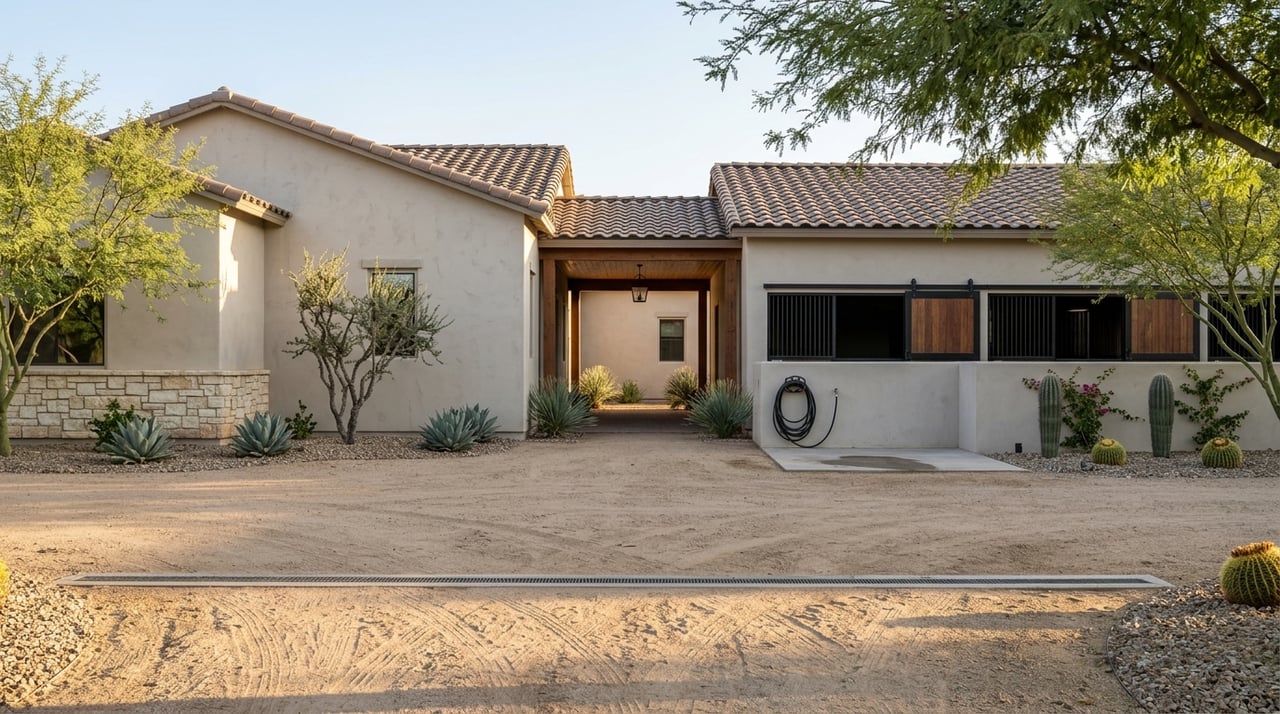
Wondering if a Cave Creek horse property is really as simple as buying land and bringing your horses home? In this market, the lifestyle can be incredible, but the details matter. If you want room to ride, space to build, and confidence in what a parcel can legally support, this guide will help you focus on the issues that count most before you buy. Let’s dive in.
Why Cave Creek draws horse buyers
Cave Creek stands out for buyers who want an equestrian lifestyle close to the Phoenix metro. The town presents itself as an outdoor-oriented community with trail connections to Cave Creek Regional Park, Spur Cross Ranch Conservation Area, the Tonto National Forest, and Desert Foothills Land Trust properties.
That access is a major draw, especially if you want a property that supports both day-to-day horse keeping and weekend riding. The town also states that horses have right-of-way on shared trails, and Maricopa County notes horse staging areas at Cave Creek Regional Park and Spur Cross Ranch Conservation Area.
Still, trail access should never be assumed. Cave Creek states that some right-of-way trails are signed, some primitive trails are unsigned, and trails on state trust land require a valid current permit from the Arizona State Land Department.
Verify trail access parcel by parcel
If direct riding access matters to you, confirm it early in the process. A nearby trailhead or a horse-friendly setting does not automatically mean your parcel has the route, legal access, or permit setup you expect.
This is especially important on acreage where boundaries, easements, and nearby land ownership can shape how you actually move from the property to the trail system. In Cave Creek, the practical question is not just whether trails exist nearby, but whether your specific parcel connects in a usable and lawful way.
Start with zoning first
For horse and acreage property in Cave Creek, zoning is usually the first and most important legal issue. The town’s residential zoning includes Desert Rural (DR), Single Residence (R), and Multiple Residence (MR) districts.
For most horse-property buyers, DR zoning is the key category. Cave Creek states that DR is intended to protect scenic vistas, natural habitats, hillsides, and washes, and it allows private ranch uses on sites with at least two contiguous acres under single ownership.
Those private ranch uses include boarding, breeding, equine training, equine lessons, and the sale of ranch animals. Commercial ranches are treated separately and require at least five contiguous acres plus special use approval.
Private ranch vs commercial ranch
This is a critical distinction when you compare properties. If your goal is personal use with horses on a qualifying parcel, private ranch standards may fit your plans.
If your intended use goes beyond that, you need to confirm whether the property can meet the standards for a commercial ranch. That review should happen before you close, not after.
What DR zoning can allow
Cave Creek restricts corrals, barns, horse shades, detached accessory living quarters, and other private ranch uses to the DR zone. The code also treats horse trailers as an accessory use in DR.
That can be especially helpful if trailer parking or storage is part of your plan. It also means a listing with acreage is not enough on its own. The zoning district has to support how you want to use the property.
Gross acreage is not the same as usable acreage
One of the most common mistakes buyers make is focusing only on total lot size. In Cave Creek, the amount of land shown on a listing may not reflect how much of the site is realistically usable once setbacks, access, septic, and disturbance limits are applied.
Cave Creek’s DR parcels range widely, from DR-43 at 43,000 square feet to DR-190 at 190,000 square feet. Minimum lot widths and setbacks also vary by district, while R districts are generally smaller, including R-18 at 18,000 square feet and R-35 at 35,000 square feet.
The town code also limits lot coverage and total disturbance. Accessory uses, driveways, and septic systems count toward that disturbance calculation.
Plan your layout before you buy
That matters because your vision for the property has to fit the site on paper, not just in theory. A parcel may look large enough for a house, barn, turnout, trailer parking, guest casita, and arena, but the buildable and usable area may be tighter than expected.
Before you move forward, think through the likely footprint of:
- The main house
- Barn or tack structures
- Corrals or turnout areas
- Round pen or arena
- Trailer parking and access drive
- Septic area
- Utilities and drainage paths
- Future guest quarters or accessory space
In practical terms, the best acreage purchase is one where the legal layout supports the lifestyle you want now and later.
Understand permits before making plans
If you want to improve the property, permit questions should be part of your due diligence. Cave Creek states that accessory buildings and accessory uses require zoning clearance and building permits.
The town also notes that accessory building permits may be processed at the same time as the permit for the principal dwelling. For buyers considering a barn, paddock, arena, guest quarters, or other additions, it is important to confirm both zoning and approval requirements before work begins.
Cave Creek also says all permit applications must go through its online permitting portal. In addition, the town notes that capacity fees are one-time charges tied to new development or added water and wastewater capacity when new service is obtained.
Water and sewer can vary widely
Utility service is not uniform across Cave Creek, which makes property-specific review essential. The town states that it manages drinking water and wastewater for Cave Creek and the Desert Hills water system, but also notes that its wastewater collection area is limited.
The town further states that many residents operate private wells. It also says its municipal water system currently relies on CAP surface water rather than town-owned groundwater wells.
Wells and shared wells
If a parcel is served by private water, you should verify the setup carefully. The Arizona Department of Water Resources says its Well Record Search allows users to search the Wells55 database by parcel number, but it also states that the best way to tell whether a parcel has a well is to physically inspect the property because records may be incomplete.
ADWR also states that it does not regulate shared-well agreements, which are private contracts between the parties involved. If a property depends on a shared well, you will want to understand that arrangement clearly before closing.
Septic should be reviewed early
Many acreage properties rely on onsite wastewater systems, so septic review is a major part of the buying process. Maricopa County requires review and approval for new septic systems, remodels, and alterations.
For resale properties, the county requires a qualified inspector to inspect the system within six months before transfer. The seller must provide the buyer with the inspection report before closing, and the buyer must file a Notice of Transfer within 15 calendar days after transfer.
These steps are straightforward when handled early. They can become stressful if they are left until the last minute.
Check floodplain and site constraints
Floodplain issues can affect what you build and how you improve the land. If an acreage parcel is in a designated floodplain, Maricopa County requires a Floodplain Use Permit before building, grading, filling, installing walls or fencing, or making other man-made changes.
The county’s application materials call for items such as site plans, driveway and access locations, easements, and grading information where relevant. For buyers thinking ahead to barns, fencing, or driveway changes, this is an important early checkpoint.
A smart due diligence checklist
When you evaluate horse and acreage property in Cave Creek, keep your review focused on the items that most often affect use, cost, and timing.
Here is a practical checklist to guide your search:
- Confirm the parcel’s zoning district
- Determine whether your intended use fits private ranch or commercial ranch standards
- Verify trail access for that specific parcel
- Check whether state trust land permits apply to nearby riding routes
- Identify whether the property is on town water, a private well, or a shared well
- Confirm whether septic is in place and review the required inspection timeline
- Review setbacks, lot width, disturbance limits, and usable area
- Ask what permits may be required for barns, corrals, arenas, guest quarters, or fencing
- Check whether floodplain review or permits could affect improvements
- Ask whether new service or expanded service could trigger capacity fees
Why expert guidance matters with Cave Creek acreage
Horse property purchases often involve more moving parts than a standard home purchase. Zoning, access, utility service, septic, and future improvement plans all need to work together.
That is why a careful, property-by-property approach matters so much in Cave Creek. When you evaluate the parcel through the lens of how you actually want to live on it, you can avoid expensive surprises and move forward with more clarity.
If you are exploring horse or acreage property in Cave Creek and want a discreet, strategic buying experience, Laura Joyner can help you assess the details that shape long-term value and day-to-day enjoyment.
FAQs
What zoning should you look for when buying horse property in Cave Creek?
- In most cases, buyers should closely review whether the parcel is in Desert Rural (DR) zoning, because Cave Creek restricts corrals, barns, horse shades, detached accessory living quarters, and other private ranch uses to the DR zone.
What is the difference between a private ranch and a commercial ranch in Cave Creek?
- Cave Creek allows private ranch uses on sites with at least two contiguous acres under single ownership in DR zoning, while commercial ranches require at least five contiguous acres plus special use approval.
How do you confirm trail access for a Cave Creek horse property?
- Trail access should be verified for the specific parcel because Cave Creek states that some trails are signed, some primitive trails are unsigned, and state trust land routes require a valid current permit.
What water sources should you check on a Cave Creek acreage property?
- You should confirm whether the property is served by town water, a private well, or a shared well, since utility service is not uniform across Cave Creek and many residents operate private wells.
What septic rules apply when buying a Cave Creek property?
- For resale, Maricopa County requires a qualified inspector to inspect the septic system within six months before transfer, the seller to provide the report before closing, and the buyer to file a Notice of Transfer within 15 calendar days after transfer.
Why can a large Cave Creek parcel still have limited usable space?
- Cave Creek applies setbacks, lot width standards, lot coverage limits, and total disturbance limits, and those calculations can include items like driveways, accessory uses, and septic systems.